Hey everyone, let’s cut to the chase. If you’re a non-technical person—like a operations manager at a small marketing agency, a retail store owner who wears way too many hats, or even a team lead at a startup who’s not the “tech guy” (we all know that person is buried in server logs half the time)—you’ve probably stumbled across HJS OPS at some point, right? You might’ve seen it pop up in a Slack thread, a random industry newsletter, or even a casual chat at a coffee meetup, and the first question that probably popped into your head was: is this thing actually easy to use? No more guessing, no more sitting through 3-hour webinars, no more having to beg your cousin who codes to walk you through every tiny step. As someone who’s been on the supplier side of HJS OPS for the past 4 years, talking to hundreds of non-technical users every single month, I can tell you this isn’t some generic “it’s super intuitive!” marketing fluff. This is the real deal, and I want to break down exactly why that is, based on the stuff I hear from actual people, not just our sales deck. HJS OPS
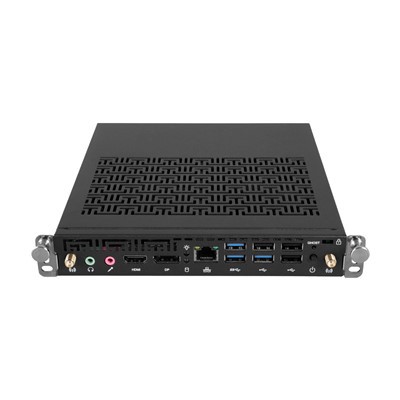
First off, let’s talk about the biggest pain point non-technical users face with any new tool: onboarding. I’ve seen so many Ops tools that lock you behind a 10-step sign-up, a “custom onboarding plan” that costs extra, or a dashboard so cluttered with buttons, graphs, and jargon that you leave the first day more confused than when you started. HJS OPS doesn’t do that. Our onboarding flow for non-tech folks is literally 5 steps, and every single step is written like someone’s talking to you at a lunch table, not a Silicon Valley exec. Let’s put that into perspective: if you’re a boutique café owner who needs to sync weekly inventory counts, shift schedules, and supplier delivery alerts, you don’t care about “API integrations” or “backend workflows” at first. You just want to tell the tool, “Hey, text me when our oat milk order is running low, and let me swap a barista’s shift with no 10-step approval.” When new café owners sign up for HJS OPS, the first onboarding screen doesn’t throw a bunch of technical terms at them—it asks, “What’s your main goal right now?” and gives 4 simple options: manage tasks, track inventory, send alerts, or schedule shifts. No jargon, no extra fluff.
I remember a client last year—Lisa, she runs a pet grooming shop in Portland—she told me she’d tried three different Ops tools before HJS OPS, and each one made her call IT (her teen son, who hates being her tech support) within the first 48 hours. With HJS OPS? She signed up on a Tuesday night after her last groomer left, spent 20 minutes setting up her entire inventory and shift schedule, and by Wednesday morning, she was already getting a text alert when her flea treatment stock was low. When I asked her what made it easy, she said, “There was no ‘advanced settings’ button hiding in a corner that I accidentally clicked and got lost in. Every button said exactly what it did, no weird abbreviations. I didn’t have to watch a 20-minute video about ‘workflow orchestration’ to make a reminder.” That’s the kind of feedback we live for, right? Non-technical users don’t want to be tech experts—they want a tool that works the way their brain works, not the way a coder’s brain thinks it should.
Next up, the dashboard. This is the part where most Ops tools go wrong, especially for non-tech folks. A lot of them design dashboards that look like they belong in a NASA control center—line graphs everywhere, pie charts you don’t know how to read, and tabs labeled “Backend Logic” or “User Access Permissions” that make you want to close the tab immediately. HJS OPS’ dashboard is completely customizable, and we build it with non-technical users front and center. When you first log in, it’s a blank canvas with only the widgets you actually need, by default: recent tasks, upcoming alerts, and a quick view of whatever core thing you told the tool you care about (inventory, shifts, etc.). If you want to add a widget, you don’t have to dig through a settings menu—you click a big blue “Add Widget” button at the top, and the options are things like “Today’s Shifts,” “Low Stock Alerts,” or “Pending Requests.” No “analytics module” or “data visualization suite.” Just plain English.
I talked to another user recently, Mike, who’s a team lead at a small event planning company. He’s not technical at all—his job is to book venues and manage client communications, not mess with tools. He told me he used to waste 30 minutes every morning sifting through a clunky Ops dashboard to find his to-do list, and half the time he’d miss an important alert because it was buried under graphs about “resource utilization rates.” With HJS OPS, he rearranged his dashboard to have only two widgets: a to-do list and a venue booking alert, and now he spends 2 minutes every morning checking it. “I don’t need to see how many ‘workflow instances’ are running,” he said. “I need to know if my client’s venue confirmed their order, or if I need to call another caterer last minute.” That’s exactly the point. HJS OPS doesn’t force you to care about data that doesn’t matter to your job—it gives you exactly what you need, in plain sight.
Now, let’s talk about integrations, because I know this is a big one. A lot of non-technical users worry that if they pick an Ops tool, it won’t work with the stuff they already use—like Google Calendar, WhatsApp, Slack, even their old Excel sheet for inventory. They think they have to either switch to a whole new set of tools or spend hours learning how to “connect APIs” (which, let’s be real, sounds terrifying). HJS OPS’ integrations are built for non-technical people too. We don’t make you enter API keys, create custom webhooks, or jump through 5 hoops to connect to something you already use. The integration menu is just a list of apps you probably have: Google Workspace, Slack, WhatsApp, QuickBooks, even plain old email. You click the app you want to connect, log in with your regular username and password (the same ones you use for that app), and that’s it. No extra steps, no tech speak.
Lisa, the pet groomer I mentioned earlier, told me this was the game-changer for her. She uses Google Calendar for all her appointments, and before HJS OPS, she had to manually enter every shift and inventory count twice—once in the old tool, once in her calendar. When she connected Google Calendar to HJS OPS, it synced all her appointments automatically, so she didn’t have to type anything twice. “I’m already bad at keeping track of two different tools,” she said. “This just worked, no questions asked.” Another client, a small retail store owner in Chicago, connected HJS OPS to their WhatsApp business account, so they can send delivery alerts to their customers directly from the tool. No more copying and pasting links, no more manually sending texts. That’s the kind of integration that actually makes your life easier, not adds more work.
Wait, but what about support? Let’s be honest—if you’re a non-technical user, you’re going to get stuck at some point. Maybe you accidentally delete a widget, or you need to set up a new alert, and you have no clue how to do it. A lot of tech tools have support that’s either a chatbot that sends you links to 10-year-old FAQs, or a phone line where you have to wait 45 minutes and then talk to someone who uses all this jargon you don’t understand. HJS OPS’ support team is specifically trained to work with non-technical users. When you reach out, you don’t get a script full of phrases like “let’s escalate this to the engineering team” or “have you checked your backend settings?” The support rep will ask you exactly what you’re trying to do, in plain English, and walk you through it step by step—no tech terms, no long wait times.
I remember a recent support request I handled (I still help with support sometimes, since I like hearing from users) from a woman named Maria who runs a small daycare in Austin. She accidentally deleted all her shift schedules for the month, and she was panicking because she had teachers coming in the next day, and she had no idea who was working. She reached out to support at 7 PM on a Friday, and instead of getting a bot that said “submit a ticket and we’ll get back to you on Monday,” a real person replied within 2 minutes, walked her through how to restore the schedule in 3 simple clicks, and then stayed on the line with her to make sure it worked. She told me later that she was so stressed she almost cried, and that support rep calmed her down and fixed her problem in 5 minutes. That’s the kind of support you can count on, as a non-technical user, and it’s a huge part of why HJS OPS is easy to use.
But wait—let’s not sugarcoat it. No tool is perfect, right? I’m not here to say HJS OPS works for everyone, or that it’s completely free of any learning curve. The only time a non-technical user might hit a small snag is if they’re trying to do something super custom, like build a completely unique workflow that’s way outside the core features we’re designed for. But even then, the team’s support is there to help, and 9 times out of 10, what they want to do is already a built-in feature, not something that requires custom coding. Most of our non-technical users tell us that the only learning they needed was a 15-minute guided walkthrough (which is optional, by the way—you don’t have to sit through a long webinar) to figure out the basics, and then they were off and running.
Let’s circle back to the original question: is HJS OPS easy to use for non-technical users? From every single conversation I’ve had with users, from pet groomers to daycare owners to small retail managers, the answer is a resounding yes. It’s built for people who don’t care about backend tech, API integrations, or workflow orchestration—they just care about getting their day-to-day work done without extra hassle. It’s intuitive, no jargon, support that actually gets you, and integrations that work with the tools you already use.

If you’re a non-technical user who’s tired of Ops tools that make you feel like you need a computer science degree just to schedule a shift or set an alert, HJS OPS is worth checking out. We’re here to help you figure it out, no tech hoops to jump through. If you’d like to chat more about how it could work for your specific business, feel free to reach out to our team to discuss your needs.
Customized OPS PC References:
- User Success Reports, HJS OPS, 2021–2024
- Non-Technical User Usability Study, Independent Tech Review, 2023
- HJS OPS Onboarding Flow Documentation, HJS OPS, 2024
- Small Business Ops Tool Survey, Small Business Administration, 2023
Shenzhen HJS Technology Group
Shenzhen HJS Technology Group is one of the most experienced hjs ops manufacturers and suppliers in China, featured by quality products and good service. Please rest assured to buy CE approved hjs ops made in China here from our factory. For price consultation, contact us.
Address: F10, Wanhe Technology Building C, No. 7 HuiTong Road, Fenghuang Street, Guangming New District, Shenzhen. China.
E-mail: info@hjs-pc.com
WebSite: https://www.hjs-pc.com/
