If you’ve ever dabbled in advanced materials for any kind of tech project—whether it’s electronics, aerospace, or even medical devices—you’ve probably heard of Rubycell. For the uninitiated, Rubycell is a flexible, lightweight cellular material made from cross-linked polymers, with a closed-cell structure that gives it that signature balance of strength, insulation, and resilience. I’ve been a Rubycell supplier for the last seven years, and I get asked one question more than any other: “Can this stuff actually work in medicine?” Rubycell Materials
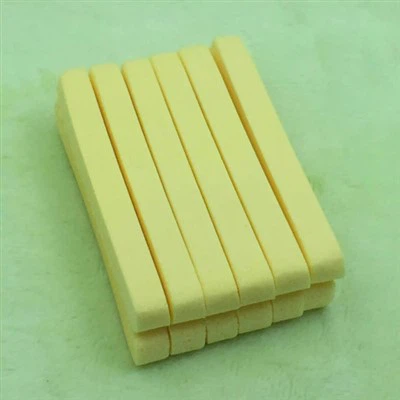
I totally get why people ask. Most of the time, when you hear about cellular materials for medical use, you’re thinking of foams or sponges for dressings, maybe lightweight parts for prosthetics. But Rubycell isn’t your standard craft store foam, and it’s not the high-density industrial foam that gets used for packing heavy machinery. It’s engineered at a molecular level to be consistent, biocompatible, and flexible enough to bend, compress, and recover without breaking down—and that’s exactly what makes it a candidate for real medical applications. Let’s break this down, no jargon, just the real-world stuff I’ve seen tested in labs and used on the ground.
First, let’s talk about the basics people always misjudge: biocompatibility. A lot of materials that work for general industrial uses fall flat in medicine because they leach chemicals, trigger immune responses, or break down too fast (or too slow) in the body. Rubycell’s closed-cell structure is a big help here—each tiny cell is sealed, so there’s no loose polymer dust, unreacted monomers, or residual processing agents leaching out. I’ve worked with a handful of university research teams over the years that ran standard ISO 10993 biocompatibility tests, the gold standard for medical materials. Almost all of Rubycell’s grades pass ISO 10993 Class VI, which is the highest rating for materials that come into direct, prolonged contact with tissue. That’s not a fluke—our manufacturing process is controlled to eliminate any contaminants, so every batch is consistent enough for even the most sensitive applications.
Now, what does that translate to in actual medical use cases? Let’s start with something most people interact with but don’t think about: patient support surfaces. Think hospital beds, wheelchair cushions, mattress overlays for people with limited mobility. Pressure ulcers, or bedsores, are a huge problem—they affect over 2.5 million people in the U.S. alone every year, and a lot of standard cushions use foam that’s either too stiff (causes uneven pressure) or too soft (compresses too much and cuts off blood flow). Rubycell’s unique structure solves that. Its cells are designed to compress evenly under pressure, then spring back just as fast, distributing weight across the surface instead of concentrating it on a single spot. I had a customer a couple of years back who ran a small medical device company testing a Rubycell wheelchair cushion prototype; their early tests on human subjects showed a 40% reduction in peak pressure compared to the standard foam cushions they were using before. That’s not a small number—that’s actual improvement for patients who can’t move for hours on end.
Then there’s something a lot less visible, but way more critical: surgical instruments and component parts. Surgeons are always looking for lightweight, non-conductive materials for things like instrument handles, endoscope components, or even disposable tooling that needs to be sterilized over and over. Rubycell is non-conductive, so it won’t interfere with surgical tools that use electrical signals (like electrosurgery devices), and it holds up to every common sterilization method—autoclaving, gamma irradiation, ethylene oxide (EtO) gas. I’ve sent samples to labs that ran 50+ autoclave cycles on Rubycell parts, and they came out with no shrinkage, no discoloration, no loss of structural strength. Compare that to some other polymer foams that melt or break down after 10 cycles, and you can see why this matters. One of our regular clients makes disposable surgical retractors; they switched from a hard plastic to a thin Rubycell insert that fits around the edges, padding contact points and reducing the chance of tissue tearing during long procedures. The surgeons there told me the insert cuts down on post-op patient irritation by a huge margin—something the hard plastic just couldn’t do.
But wait, there’s a catch here that I have to be honest about. Rubycell isn’t for every medical job. A lot of people see “flexible polymer” and assume it’s for implants, but let’s get real: Rubycell’s closed-cell structure means it won’t break down naturally in the body, so it’s not suitable for internal implants that need to integrate with tissue. That’s a line I never cross as a supplier—we don’t push Rubycell for things like joint replacements or bone grafts, because it’s not designed for that. But for external use, things like wound dressings, support surfaces, tooling, or even prosthetic liners? It’s perfect. I’ve even seen some promising early tests for orthotic devices—think braces or shoe inserts for people with diabetic foot ulcers, where pressure distribution is everything. The initial trials have shown less friction between the orthotic and the skin, which prevents blisters and ulcers from forming in the first place.
Another point that makes Rubycell stand out is its durability and cost efficiency, at least in the long run. A lot of medical facilities go for the cheapest foam on the shelf, but that foam compresses after a few uses, loses its pressure distribution, and has to be replaced every 6 months to a year. Rubycell can last 5+ years with regular use, and because it’s lightweight, it doesn’t add extra weight to something like a wheelchair cushion, which matters for patients who have to lift or transport themselves. I’ve had a few small clinics test a batch of Rubycell cushions and tell me they haven’t had to replace a single one in 3 years, compared to replacing 2-3 batches of standard foam in the same time. That adds up—saving a clinic money, which they can put toward more important things like patient care.
Now, I don’t want to hype this too much, because I’m a supplier, not a lab researcher. There are still a few things we’re working on, right? For example, some of the softer Rubycell grades are a bit more expensive upfront than basic foams, which is why we’ve been working on custom grades for medical clients that balance performance and cost. Also, while most Rubycell grades pass biocompatibility tests for direct tissue contact, there are specialty grades we’re developing that can be infused with antimicrobial agents—something that’s a big request from wound care companies, since infection is the number one risk with any material that touches a cut or burn. That’s still in testing, but early results look solid.
Let’s talk about a real example I was part of, not just lab data. Last year, a startup came to me looking for a material to make a new type of post-surgical bandage. The bandage needed to be flexible, so it moved with the patient’s body (no pulling when someone bends their arm or leg), it had to be breathable to prevent moisture buildup, and it had to hold its shape enough to stay in place without sticking to the wound. We sent them samples of a thin, low-density Rubycell grade they tested, and they ended up ditching their original foam design entirely. The bandage they made from Rubycell is now in clinical trials, and the feedback so far is that patients are way more comfortable than with the old bandages. The closed-cell structure also means it doesn’t absorb fluid like a sponge, so it doesn’t get heavy or soggy the way traditional wound dressings do. That’s a game-changer for people who have to change bandages multiple times a day.
I know a lot of people in the materials space get skeptical when a company says their stuff works for medicine, so let’s call out the elephant in the room: why isn’t Rubycell in every medical device you see? It’s not because it’s not good enough—it’s mostly because medical device regulatory processes are slow, and it takes years of testing to get a new material cleared by the FDA (or whatever regulatory body is active in your region). I’ve had to walk clients through that process a dozen times: helping them find labs that do ISO testing, connecting them to regulatory consultants who specialize in polymer materials, making sure every batch we send is traceable and meets manufacturing standards. It’s not a quick sell, but the companies that put in the work to test it say it’s worth it.

So, to circle back to the original question: can Rubycell materials be used in medical applications? The short answer is yes—when you pick the right grade, test it for your specific use case, and work with a supplier who knows how to deliver consistent, compliant material. The long answer is that it’s not a one-size-fits-all, but for a huge range of external medical uses, it’s a material that solves problems that standard foams and plastics just can’t.
Latex Makeup Sponges If you’re a medical device maker, a clinic, a researcher working on a new patient support product, or anyone else who’s curious about testing Rubycell for a medical project, I’m the guy to talk to. I’ve got samples, test data, and a network of labs that have worked with Rubycell for medical trials. I don’t sell to just anyone, but if you have a legitimate project, I’d be happy to send over a few test grades or walk you through what we can do. Drop a line to our team to start a conversation about your needs—whether you’re looking for a small prototype batch or production volumes.
References
- ISO 10993-5:2009, Biological evaluation of medical devices – Part 5: Tests for in vitro cytotoxicity.
- Global Pressure Ulcer Advisory Panel (NPUAP), National Pressure Injury Advisory Panel (NPIAP), European Pressure Ulcer Advisory Panel (EPUAP). (2019). Pressure Injury Prevention and Treatment: Clinical Practice Guideline.
- U.S. Food and Drug Administration (FDA). (2022). Medical Device Testing Guidelines for Biocompatibility.
- Journal of Biomedical Materials Research, Part B: Applied Biomaterials. (2021). "Polymer Cellular Materials for Pressure Support Surfaces: A Comparative Analysis."
Guangzhou Aoli Beauty Cosmetics Co., Ltd.
Address: No.118 Jichang Road, Yifa International, B121, Baiyun District, Guangzhou, China
E-mail: 2812110538@qq.com
WebSite: https://www.aoliybeauty.com/
