As a clamping band supplier who’s spent the last 12 years troubleshooting, designing, and delivering these simple yet critical components to industries ranging from automotive to agricultural machinery, I get a lot of questions from clients old and new. The one I hear more than any other lately is: “Do clamping bands require maintenance?” Clamping Band
I used to roll my eyes a little when the question first popped up—after all, clamping bands look like the most low-effort parts in an assembly. A strip of metal, a worm gear, a few bolts? How much upkeep could they need? That was before I got a call a few years back from a mid-sized farm equipment manufacturer who’d had 27 hydraulic line leaks on their new tractors in a single quarter. Turned out, their maintenance team had been ignoring the clamping bands on those lines entirely. What should have been a 2-minute check every 6 months turned into thousands in warranty repairs, delayed delivery timelines, and a whole lot of frustration for both their team and mine.
That call changed how I talk about clamping bands with every customer, new and repeat. The short answer to the question is yes—they do require maintenance, but it’s not the kind of expensive, time-consuming upkeep people usually picture. It’s small, consistent, and tied directly to how you’re using those bands in the first place. Let’s break this down, because not all clamping bands are the same, and their maintenance needs shift depending on what environment they’re working in.
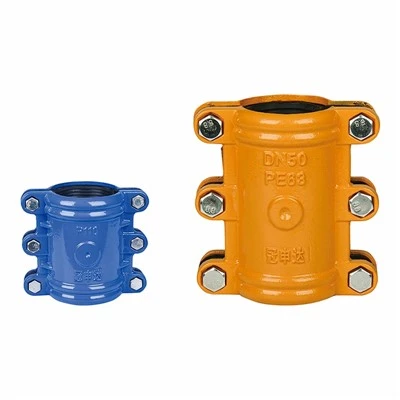
First, let’s get clear on what a clamping band is, for anyone who might be skimming. We design our clamping bands to create a secure, leak-proof seal between two joined components—hoses, pipes, wiring harnesses, exhaust systems, even fuel lines. The most common style is the worm-drive clamping band, which uses a threaded screw to tighten a steel strip around the joint, but we also produce constant-torque and T-bolt bands for high-vibration or extreme-temperature applications. Each of these types has a different purpose, and that means their maintenance routine looks a little different too.
Why do clamping bands slip or fail, anyway? A lot of people think it’s just poor installation, but that’s only part of the story. Even a perfectly installed band will loosen over time, thanks to three main factors: vibration, thermal expansion and contraction, and material degradation.
Vibration is the big one for automotive, heavy equipment, and industrial machinery. Every time a piece of equipment runs—an engine idling, a tractor bouncing over a field, a conveyor line moving parts—it creates tiny, constant forces that work against the clamping band. That worm gear or bolt holding the band tight will work loose little by little, until the band no longer presses firmly enough to keep the joint sealed. I’ve seen this happen on exhaust systems on delivery vans: the constant rumble from city stop-and-go traffic can weaken a standard worm-drive band in as little as 18 months, leading to that loud, annoying exhaust leak everyone ignores until it gets worse.
Thermal changes are another culprit. Clamping bands expand and contract with temperature, just like the hoses or pipes they’re holding. In winter, when temperatures drop, metal shrinks—if a band was tightened for summer heat, it will actually be loose by cold weather. In high-heat environments, like industrial furnaces or engine bays, the metal of the band can soften slightly, stretching just enough to lose its grip. That’s why our T-bolt bands, which are built with thicker, heat-resistant steel, are designed to handle those high-heat applications—they don’t stretch or loosen as easily.
Material degradation might be the most overlooked factor. Clamping bands aren’t immortal. They’re usually made of stainless steel, zinc-plated steel, or sometimes aluminum, but even the best materials will corrode over time if they’re exposed to harsh conditions. Salt on roads in winter, chemicals in agricultural fertilizers, saltwater in marine applications—all of these can eat away at the band’s surface, leading to rust that weakens the metal, or crevice corrosion right where the band presses against the hose. Once that corrosion starts, the band can’t hold its tension, and a leak is almost inevitable.
So what does proper maintenance for clamping bands actually look like? It’s not a full teardown or replacement every few months—don’t let anyone tell you that. It’s a few simple checks, tailored to your application, that take minutes per joint.
Let’s start with the basics: a visual inspection. Every time you do routine maintenance on the surrounding component—changing a hose, servicing an engine, inspecting wiring—take 10 seconds to glance at each clamping band. Is the band still sitting evenly around the joint, no gaps between the strip and the hose or pipe? Is there any rust, cracking, or wear on the metal? For worm-drive bands, make sure the screw or bolt isn’t too loose—you can usually tell if it’s wiggles slightly when you tap it with a screwdriver. If it’s loose, that’s an easy fix: just tighten the screw a quarter turn. Don’t over-tighten it, though—we see a lot of clients who crank the screw until it’s almost stripped, which can crack the hose or warp the band, leading to failure faster.
For high-vibration applications, like heavy construction equipment or agricultural tractors, we recommend a slightly more frequent check—every 3 to 6 months. I talked to a construction client last year who switched from checking clamping bands annually to every 4 months, and they cut their line leaks by 90% in the first year. The key here is to adjust the tension as needed, especially after the first 50 hours of use. When you first install a clamping band, the hose material is still setting, so it might stretch a little in those first few cycles. A small, gentle tightening after that initial break-in period makes a huge difference long-term.
Then there’s environmental-specific maintenance. If you’re working in a corrosive environment—marine, agricultural, or chemical manufacturing—you can’t just do a visual check. After every exposure to salt, fertilizer, or cleaning chemicals, you need to wipe down the clamping band to remove any residue that could cause corrosion. We also recommend using a corrosion-resistant coating on the bands for these applications, or specifying austenitic stainless steel (like 316) which is far more resistant to salt and chemicals than standard 304 stainless. I’ve seen clients save thousands by investing a few extra cents in corrosion-resistant bands instead of replacing leaking hoses and equipment parts every year.
A common mistake I see with maintenance is waiting until a problem is obvious. A leak that’s dripping onto a hot engine, a loose hose that’s flapping around—those are the big, visible issues, but by the time you notice them, the clamping band has already been failing for weeks. Tiny, slow leaks from a loose band can cause corrosion on adjacent parts, reduce the efficiency of your equipment, and even create safety hazards—like fuel leaks that can catch fire in an engine bay. Catching a loose band during a routine check, before it causes a big problem, is always better.
Wait a second—what about new installations? A lot of people think “I just installed this new band, so it doesn’t need maintenance.” That’s not true. New clamping bands, even high-quality ones, will settle during their first few weeks of use. Hoses and pipes aren’t perfectly rigid, so the connection between them will shift slightly as the equipment runs. That initial installation tension might be just right, but after a few hundred cycles, it can loosen. We always advise clients to do a check and small tension adjustment on new bands after 30 to 60 days of use—another 2-minute step that prevents a lot of headaches.
I want to make something clear, too: not all clamping bands are created equal, and that affects maintenance needs. A cheap, generic worm-drive band from a big-box store might not hold tension as well as a quality band we produce. Those cheap bands often use thin steel that stretches easily, or a worm gear that wears out quickly, so they’ll need more frequent tightening or replacement. That’s why I always tell customers: the cost of a quality clamping band is nothing compared to the cost of a breakdown, warranty claim, or safety incident. A $1.50 band might seem like a good deal upfront, but if it fails after 6 months, you’re looking at replacing a $50 hose and 2 hours of labor.
Now, let’s talk about when maintenance turns into replacement. You don’t have to keep tightening a band that’s clearly past its prime. If you see rust eating through the metal, cracks in the steel strip, or the worm gear stripped so it won’t tighten anymore, it’s time to replace that clamping band. We recommend replacing bands every 3 to 5 years, even if they seem to be working fine, just as a proactive measure. Harsh environments might mean replacing every 2 years, while mild indoor applications can go up to 7 years. That’s a general rule, of course—always inspect first.
I’ve had clients who asked me if they can reuse clamping bands, and the answer is: rarely. Clamping bands are designed to be a one-time-use component mostly, because when you loosen the worm gear, the strip loses its tension, and it’s hard to get the same secure seal again. There are exceptions—constant-torque bands can sometimes be adjusted, but even then, reusing a band means taking a risk on seal integrity. It’s almost always cheaper, in the long run, to install a new, quality band than to reuse an old one.
Let’s circle back to that tractor story I mentioned earlier. That client was using generic zinc-plated bands on their hydraulic lines, and their maintenance team wasn’t checking them at all. By the time they called me, they had 27 leaks, some of which had damaged hydraulic pumps, requiring a $1,200 repair each. We worked with their team to switch to 304 stainless worm-drive bands, adjusted their maintenance schedule to check every 4 months, and offered a 10-year warranty on all the bands we supplied. In the next quarter, they only had 2 leaks, none of which required major part replacement. That’s the difference between ignoring maintenance and taking 2 minutes to care for a small component.
So, to answer the original question: yes, clamping bands do require maintenance, but it’s simple, low-cost, and worth every second. It’s not a complicated process—it’s visual checks, occasional tension adjustments, cleaning off corrosive residue, and replacing bands when they show wear. The key is to make it part of your existing routine maintenance, not a separate, big task.
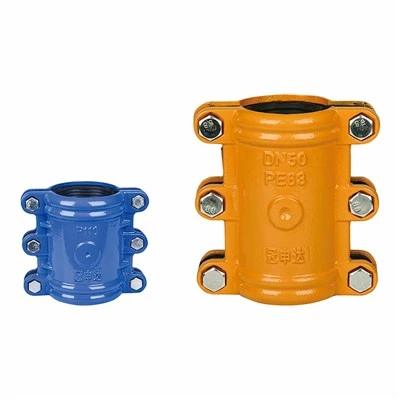
Straight Repair Clamp If you’re not sure what kind of clamping bands are right for your application, or you need help setting up a maintenance schedule that works for your equipment, we’re here to help. Whether you’re a mechanic, a factory manager, an agricultural equipment owner, or a vehicle fleet operator, we can provide custom clamping bands tailored to your needs and walk you through the easiest maintenance steps to keep your assemblies secure. Don’t wait until a leak causes a costly breakdown—reach out to discuss your clamping band needs today.
References
- Society of Automotive Engineers (SAE). "Performance Requirements for Clamping Bands Used in Automotive Fluid Systems." SAE International, 2021.
- International Organization for Standardization (ISO). "Clamping Bands for Hose and Tube Joints – General Requirements and Test Methods." ISO 16923:2019, 2019.
- Corrosion Prevention Association. "Best Practices for Maintaining Industrial Fasteners and Clamping Components." CPA Technical Bulletin No. 12, 2020.
- Agricultural Equipment Manufacturers Association (AEMA). "Guidelines for Routine Maintenance of Hydraulic Line Components in Farm Machinery." AEMA Report 007, 2022.
Fujian Fufa Valve Manufacturing Co., Ltd.
As one of the most professional clamping band manufacturers and suppliers in China, we’re featured by quality products and good price. Please rest assured to buy durable clamping band made in China here from our factory. Welcome to view our website for more information.
Address: Meilin Xikou Industrial Zone, Nan’an City, Quanzhou City, Fujian Province
E-mail: hongwenjin@fufafamen.cn
WebSite: https://www.fufavalve.com/
