When a project engineer reaches out to our team as an LSZH cable compounds supplier, one of the first questions they ask is, “What’s the flammability rating of your materials?” It’s a fair question—flammability ratings aren’t just industry jargon; they’re the difference between a cable that meets building code requirements and one that could put lives and assets at risk. Over the 12 years we’ve worked with LSZH compounds, we’ve learned that many stakeholders confuse general product descriptions with specific test standards, so let’s break this down clearly, from test methods to what those ratings actually mean for your application. LSZH Cable Compounds
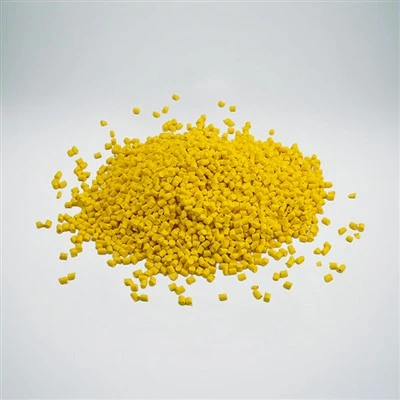
First, let’s start with a quick refresher on what LSZH even is. LSZH stands for Low Smoke Zero Halogen, a class of cable compounds designed to emit far less smoke and no corrosive halogen gases when burned, compared to traditional PVC-based cables. That core property already ties directly to their flammability performance, but flammability itself isn’t a single metric—it’s measured through standardized, third-party tests that assess how a material ignites, spreads flame, and contributes to smoke and toxic gas release during a fire. These tests aren’t arbitrary; they’re developed to mimic real-world fire scenarios, so a rating from one doesn’t always translate to another, depending on where your cable will be installed.
Now, let’s walk through the most common flammability ratings for LSZH cable compounds, and what each means for our customers. The first and most widely referenced is the IEC 60332 series, specifically IEC 60332-1 and IEC 60332-3. IEC 60332-1 is the small-scale test: it’s a vertical burn test on a single insulated wire or small cable sample, where a 1 kW flame is applied to the end of the sample for 60 seconds. The rating here is pretty straightforward: if the flame extinguishes on its own within a set time (usually less than 60 seconds after the flame is removed), the material passes. This is the basic minimum for most general building applications, but it’s not enough for large spaces like airports, train stations, or high-rise office towers. That’s where IEC 60332-3 comes in. This is a large-scale test, often called a “vertical tray test,” where a bunch of cables are bundled together to mimic real cable runs in trays or racks. The test measures how far flame spreads along the bundle. LSZH compounds that meet IEC 60332-3 Category C (the most common for commercial applications) limit flame spread to under 1.5 meters, while higher categories (A and B) have even stricter limits. For us as a supplier, most of our standard LSZH compounds ship with certification for IEC 60332-1 and IEC 60332-3 Category C, because that’s the sweet spot for 90% of our customer projects.
Next, many North American customers ask about UL ratings, specifically UL 1581 and UL 94. UL 94 is the standard for plastics flammability, with ratings ranging from HB (the lowest, for thin materials) up to V-0, which means a material self-extinguishes within 10 seconds after ignition, with no drips that can spread fire. For LSZH compounds, a common target is UL 94 V-0 at a 1.6mm thickness—thick enough to cover most jacketing applications. But we’ve noticed a key difference: UL 94 is a material flammability test, while UL 1581 is for finished cables, so the two are complementary, not interchangeable. We also work with customers in Canada who require CSA standards, like CSA FT4, which is similar to UL 1581 but tailored to Canadian building codes, so we ensure our compounds meet that too for cross-border projects.
Then there’s the NFPA 70 (NEC) standard, which is the National Electrical Code used across the U.S. For LSZH cables, the key rating here is OF (Open Foam) or, more commonly for solid jacketing, OFN (Open Non-Metallic). Wait, no—let me correct that: NEC doesn’t use the same flammability labels as UL, but it references IEC and UL tests, and also has specific requirements for cables installed in plenum spaces. Plenum cables need a low-smoke rating and strict flame spread, which our LSZH compounds meet, but the NEC also mandates that the cable’s flame spread index (FSI) and smoke developed index (SDI) fall below specific thresholds—usually FSI <25 and SDI <50 for plenums. That’s a critical point: even if a compound passes IEC tests, it might not meet NEC’s plenum requirements, so we always flag that for customers specifying installations in air handling spaces.
A lot of people ask us: how does LSZH’s flammability performance compare to PVC? The short answer is, it’s drastically better. Traditional PVC cables are high in chlorine, so when they burn, they release dense, corrosive hydrogen chloride gas that irritates respiratory systems and can corrode equipment. Their flame spread is also much higher—PVC often fails IEC 60332-3, meaning flame travels the full length of the cable bundle. LSZH compounds, by contrast, use non-halogenated fillers like aluminum hydroxide that release water vapor when burned, which suppresses flame and smoke. That’s why their flammability ratings are not just about not burning easily, but about reducing fire risk entirely by slowing spread and minimizing toxic emissions.
But here’s something we learned over the years: flammability ratings aren’t one-size-fits-all. We had a customer a couple years back who came to us saying they needed an LSZH compound with a UL 94 V-0 rating, but when we asked them what the cable was for, they were installing it in a utility closet in a residential building. That customer’s initial spec was overkill—their space only required IEC 60332-1 and a low-smoke rating, so supplying the V-0 compound would have increased their material cost by 18% for no tangible benefit. Conversely, another customer working on a high-rise data center needed a compound that passed IEC 60332-3 Category A, and their project required additional testing for fire resistance in high-heat environments, so we had to adjust our formulation to meet that specific standard. That’s why we never just quote a generic “LSZH flammability rating”; we ask detailed questions about the application, location, and code requirements to make sure we’re providing the right material.
Another common misconception: zero doesn’t mean zero flammability. No cable compound is completely non-flammable. The “zero” in LSZH refers to zero halogen, not zero flammability. A cable is still going to burn if exposed to a large enough flame for long enough, but LSZH compounds are designed to self-extinguish once the ignition source is removed, which is what all those flammability ratings measure. That’s a key point to communicate to project teams who might think LSZH is a fireproof material—it’s fire-resistant in the context of common fire scenarios, which is what matters for building safety.
We also test every batch of our LSZH compounds in our in-house lab, which is why we can provide instantaneous certification for most tests, instead of waiting for third-party results. We run both the small-scale IEC 60332-1 test and the large-scale IEC 60332-3 test on every production run, as well as UL 94 testing for our North American customers. That consistency is something a lot of our customers value, because they don’t have to worry about a batch of cables failing on site inspections. For example, a major transit authority we work with requires 100% compliance with IEC 60332-3 for all cables in their train lines, and we’ve never had a batch rejected in 8 years of supplying them, because we maintain strict quality control on flammability performance.
If you’re in the process of specifying LSZH cables for your project, here are a few tips to avoid mistakes when evaluating flammability ratings. First, check the local building codes for your project—many regions have mandatory standards, like NFPA 70 in the U.S. or EN 50575 in the EU, which are the EU’s construction product regulation for fire performance. EN 50575 rates construction products on a scale from A1 (non-combustible) to F (highly combustible), and LSZH cables typically fall into Class B or C, depending on their flame spread. Second, don’t confuse material ratings with finished cable ratings: the flammability rating of the LSZH compound itself is not always the same as the finished cable, because factors like cable thickness, conductor size, and jacketing thickness can affect how flame spreads. Third, if you’re working on a specialized application, like a submarine cable or a space exploration vehicle, you’ll need to ask for custom flammability testing, which our team can facilitate through third-party labs to meet unique requirements.
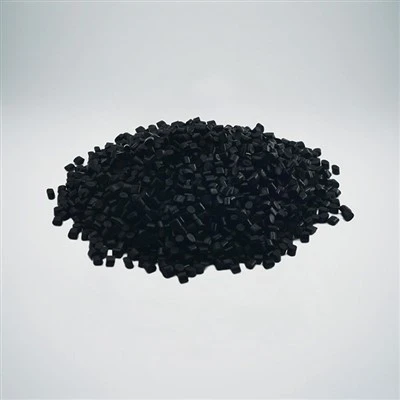
At the end of the day, the flammability rating of LSZH cable compounds is one of the most critical performance metrics, but it’s only useful when it aligns with your specific project needs. Whether you’re specifying for a residential building, a transit system, or a data center, getting the right rating means balancing safety, cost, and compliance. If you’re ready to discuss LSZH compound options for your next project, our team is here to walk through your requirements, test data, and ensure you get a material that meets all your flammability and performance needs. Reach out to start a conversation tailored to your project, no generic quotes, just targeted advice from our team of engineers who specialize in LSZH compounds.
TPE and TPR Compounds References
IEC 60332-1:2015, Test on cables under fire conditions – Part 1: Vertical test for a single insulated wire or cable
IEC 60332-3-22:2018, Test on cables under fire conditions – Part 3-22: Vertical flame spread on bunches of cables using the 20 kW propane burner – Test method and requirements for category C
UL 94, Standard for Safety Tests for Flammability of Plastic Materials for Parts in Devices and Appliances
NFPA 70®: National Electrical Code® (NEC®), Article 310.15(E)(2) for Plenum Cables
EN 50575:2014, Construction Products – Assessment of Fire Performance of Electrical Cables
Opta New Materials (Jiangsu) Co., Ltd.
As one of the most professional LSZH cable compounds manufacturers and suppliers in China, we also support customized service. We warmly welcome you to buy bulk durable LSZH cable compounds from our factory. If you have any enquiry about free sample, please feel free to email us.
Address: No.80, Jingang Avenue, Zhenjiang New Area, Zhenjiang City, Jiangsu Province, China.
E-mail: le.yin@optachem.com
WebSite: https://www.optanewmaterials.com/
