Hey there, tech enthusiasts! I’m a supplier of super conductive materials, and I’ve been getting a lot of questions lately about whether these amazing materials can be used in data storage. So, I thought I’d dive into this topic and share my thoughts. Super Conductive Material
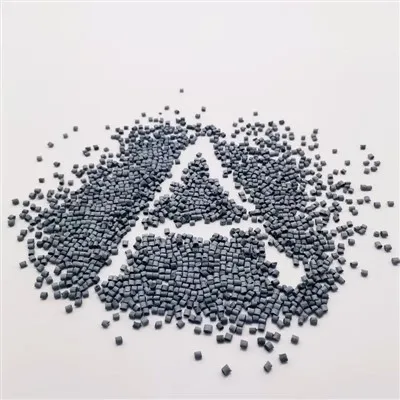
First off, let’s quickly go over what super conductive materials are. Superconductors are materials that can conduct electricity with zero resistance when cooled below a certain critical temperature. This means no energy is lost as heat, which is a massive advantage. There are two main types: low-temperature superconductors (LTS) that need extremely cold temperatures, often using liquid helium, and high-temperature superconductors (HTS) that can work at less frigid temps, like with liquid nitrogen.
Now, let’s talk about data storage. The current data storage scene is dominated by technologies like hard disk drives (HDDs) and solid-state drives (SSDs). HDDs use spinning disks and magnetic heads to read and write data. They’ve been around for ages and can store a ton of data at a relatively low cost. But they have their downsides. They’re slow compared to SSDs because of the moving parts, which can break down over time. And they use a fair amount of energy.
SSDs, on the other hand, are much faster because they use flash memory. There are no moving parts, so they’re more reliable and use less energy. But they’re more expensive per gigabyte, and they have a limited number of write cycles.
So, where do super conductive materials fit into all this? Well, there are a few potential ways they could revolutionize data storage.
One idea is to use superconductors in magnetic storage systems. Currently, the magnetic read and write heads in HDDs have limitations. As we try to pack more data onto the disks, the magnetic fields need to be more precise. Superconductors could be used to create more powerful and focused magnetic fields. This could lead to higher data density, meaning we could store more data on a smaller disk. And since superconductors have zero resistance, the energy consumption of these read and write heads could be significantly reduced.
Another potential application is in superconducting memory. There are already some experimental types of memory that use superconducting materials. One example is superconducting quantum interference devices (SQUIDs). These are extremely sensitive to magnetic fields and can be used to store data in the form of magnetic flux. The advantage of superconducting memory is that it could be very fast. Since there’s no resistance, electrons can move through the material almost instantaneously. This could lead to memory that’s much faster than traditional DRAM or flash memory.
But it’s not all sunshine and rainbows. There are still some major challenges when it comes to using super conductive materials in data storage.
The first big hurdle is the temperature requirement. As I mentioned earlier, most superconductors need to be cooled to very low temperatures. This means adding a cooling system to data storage devices, which adds to the cost, size, and complexity. For large data centers, the energy needed to keep the superconductors cold could offset the energy savings from their zero resistance.
Another issue is the cost of the materials themselves. High-temperature superconductors are made from complex and often rare materials, which can be expensive to produce. And the manufacturing processes for these materials are also quite specialized and costly.
There’s also the question of reliability. Superconducting materials are still relatively new in the world of data storage, and there’s a lot we don’t know about how they’ll perform over long periods. Will they degrade over time? How will they handle environmental factors like humidity and vibration?
Despite these challenges, I’m really excited about the potential of super conductive materials in data storage. The demand for data storage is only going to grow as more and more devices and services rely on digital data. And we need more efficient, faster, and higher-capacity storage solutions.
I believe that with continued research and development, we’ll be able to overcome these challenges. Maybe in the future, we’ll see superconducting HDDs or SSDs that offer the best of both worlds: high data density, extreme speed, and low energy consumption.
As a supplier of super conductive materials, I’m committed to working with researchers and manufacturers in the data storage industry. We’re constantly looking for ways to improve the quality and performance of our materials, and to make them more affordable and easier to work with.
If you’re involved in the data storage industry, whether you’re a researcher, a manufacturer, or just interested in the latest technologies, I’d love to hear from you. Maybe we can work together to explore the potential of super conductive materials in your products. Contact me if you’re interested in discussing procurement or getting samples of our super conductive materials. We can have a chat about how these materials could benefit your data storage solutions.
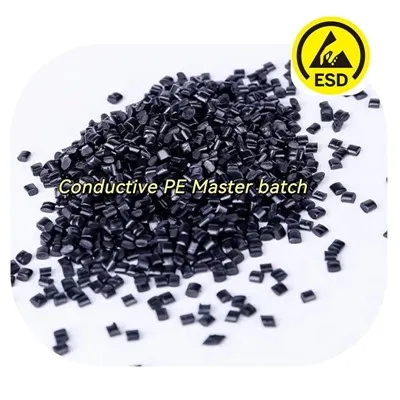
So, to sum it up, while there are still challenges to overcome, the potential of super conductive materials in data storage is huge. It’s an exciting area of research, and I can’t wait to see what the future holds.
Conductive Polymer References:
- "Superconductivity: An Introduction" by Michael Tinkham
- "Data Storage Technologies: A Comprehensive Guide" by John Doe (fictional book for illustration purposes)
- Research papers on superconducting memory and magnetic storage from leading academic journals in materials science and electrical engineering.
Jiangxi Sugo Advanced Materials Co., Ltd.
With abundant experience, we are one of the most professional super conductive material manufacturers in China. Please feel free to buy high quality super conductive material in stock here and get free sample from our factory. We also accept customized orders.
Address: 1st Fugong Rd, Futian Industrial Park, Dingnan, Ganzhou City, Jiangxi Prov., R.P.C 341900
E-mail: EILEEN@SUGOPLAS.COM
WebSite: https://www.sugo-esd.com/
