If you’ve ever driven down a highway at 2 a.m. and spotted a faded marker sign that made you second-guess your exit, or had a delivery driver flag you down because a warehouse marker sign was half-obscured by a tree, you already know these little signs don’t get enough credit. As a marker signs supplier, I spend way more time than most digging through traffic code manuals, chatting with local DOT guys, and troubleshooting why a client’s brand-new signs got cited for a violation before they even went up. Today, I’m breaking down what traffic codes actually require for marker signs—no stuffy legal jargon, just real, usable info that comes from answering the same questions 10+ times a week. Marker Signs
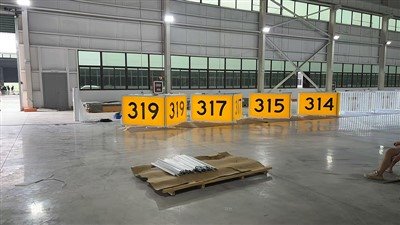
First off, let’s clarify what we’re even talking about here, because “marker sign” can mean 10 different things depending on who you ask. A lot of people mix them up with street name signs or regulatory signs (like “stop” or “yield”), but marker signs are the smaller, consistent ones that guide you along a route without yelling. Think: highway mile markers that count down to the next exit, school zone markers that flash when kids are present, railroad crossing advance markers, or the little posts that mark turn lanes on a busy urban street. They’re the unsung workhorses of traffic flow, and every single one has to check specific boxes set by the Manual on Uniform Traffic Control Devices (MUTCD)—that’s the big rulebook the Federal Highway Administration (FHWA) updates every few years, and almost every U.S. state and territory uses it, plus tons of other countries have adopted similar frameworks.
Let’s start with the basics that trip up the most first-time buyers: size and dimensions. This isn’t arbitrary—code doesn’t let you make a mile marker the size of a postcard, because if you’re driving 65 mph, you need time to read it. For highway primary mile markers (the big white or green ones with black numbers you see on interstates), MUTCD says the height of the numerals has to be at least 10 inches for roads with speed limits under 50 mph, and a full 12 inches for roads 50 mph or faster. The sign itself has to be tall enough that the bottom of the sign isn’t less than 2 feet above the road surface, and the top can’t be more than 7 feet high—enough for a semi to pass under without scraping it, but low enough that a driver’s line of sight hits it easily.
School zone markers? Those are a whole different ballgame. Most states require them to be a minimum of 18 inches tall, numerals at least 8 inches high, and they have to be visible from 500 feet away when approached—even from a car, not just a bike. I can’t tell you how many small towns call me panicking because their old school zone markers were only 12 inches tall, and a cop just cited them for being too small per local code. We’ve had to rush-make replacements for them before school starts, which is always a fun (and pricey) emergency order.
Next up: retroreflectivity, and this is where 90% of the avoidable issues come from. Let’s be real—most marker signs are read at night, or in rain, fog, or glare from the sun. If a sign’s text blends into the background after dark, it’s useless. MUTCD has super specific rules here: for most permanent marker signs, they have to be retroreflective enough that they can be read from 1,000 feet away at night with standard vehicle headlights. For temporary markers (like work zone detour signs), that distance drops to 500 feet, which makes sense because you’re slowing down anyway.
But here’s the thing a lot of people don’t know: retroreflectivity doesn’t last forever. The code doesn’t just say “be reflective”—it says you have to maintain that level, and most states require you to replace marker signs every 7 to 10 years, or test their reflectivity annually. We had a client last year who bought a bulk order of cheap non-reflective signs from a random online supplier, thought they saved money, and got a $2,000 fine from the state DOT six months later because their reflectivity was too low. Don’t cut corners here—trust me, I’ve seen way too many people learn that the hard way.
Color and contrast are the next big code boxes, and they’re way more specific than “make it stand out.” Again, this ties back to MUTCD, with small tweaks for each state, but the basics are universal for most places. Primary highway mile markers are almost always white with black numerals for interstates in most states, or green with white text for non-interstate highways. School zone markers are usually fluorescent yellow-green (that neon-yellow color that’s hard to miss) with black text, specifically so they pop against the dark road at dusk. Railroad advance markers have a white background with a black “X” and RR text, plus a red border—no exceptions.
Contrast is just as important as color. Code says the text has to have a 70% contrast ratio against the background—think: black on white is perfect, gray on white is not. If you use a dark gray text on a light gray sign, it’ll wash out in the sun and be unreadable at night, even if it’s reflective. We test every single batch of signs we make for contrast, not just because it’s a nice-to-have, but because it’s a hard requirement. Last quarter, a local government client tried to get us to skip the contrast test to save a few days on their order, and we had to turn them down—we can’t sell signs that don’t meet code, even if it means losing a sale.
Placement is another huge part of traffic code for marker signs, and it’s not just “stick it on the side of the road.” The number one rule here is clear line of sight—no overhanging tree branches, no parked cars, no utility poles blocking the view. For mile markers on interstates, they have to be placed on the right shoulder, at the exact mile point, within 10 feet of the edge of the road. For urban street markers that mark lane turns, they have to be placed at least 100 feet before the turn, so drivers have time to react, and no more than 200 feet before, so they don’t have to remember it too long.
Temporary marker signs, like those used for construction or event detours, have even stricter placement rules. They can’t be placed on the road’s travel lane, only on the shoulder or median, and they have to be spaced every 50 to 100 feet along the detour so drivers don’t miss the next turn. We worked on a big downtown construction project last year where the contractor kept putting their detour markers too close to the intersection, and the city made them take them all down and re-position—cost them an extra $1,500, all because they didn’t check code.
Now, what about custom or special use marker signs? Like the ones that mark accessible parking spots, or historic district markers, or bike route signs? Those still have to meet MUTCD or local state code, even if they’re not the standard highway or school signs. Accessible parking markers, for example, have to be 30 inches tall minimum, with a 6-inch accessible symbol that’s clearly visible, and placed directly above the parking space sign so it’s obvious which spot is which. Bike route signs have to be fluorescent green, with white text, and spaced every 1/4 mile on urban routes, every mile on rural routes. We make a lot of those speciality signs, and we’ve learned that each state has tiny variations—some states allow blue for historic markers, others require brown, so we always double-check before we start cutting metal.
Wait, I should also mention maintenance, because traffic code doesn’t end when the sign goes up. Most local DOTs and city public works departments have annual inspections for marker signs, and if a sign is faded, bent, broken, or covered in graffiti, it can get cited, and sometimes they have to pay for urgent replacements. A lot of my long-term clients sign up for our maintenance program, where we do annual reflectivity tests and replace signs before they get flagged—way cheaper than paying fines or dealing with last-minute emergency orders.
Let’s talk about common mistakes I see all the time, just so you can avoid them. First, using the wrong size numerals. I mentioned earlier that speed limits dictate numeral height, but people always forget that if a sign has multiple numbers (like mile markers, which go up to 70), all numbers have to be the same height and width. No bigger number for the tens place, that’s against code. Second, using cheap, low-quality aluminum or plastic. Code requires signs to be weather-resistant—aluminum is standard because it doesn’t rust, and plastic (for temporary signs) has to be UV-resistant, otherwise it’ll crack or fade in a year. Third, cutting corners on installation. Even if you make a perfect sign, if you hang it on a flimsy post that bends in a heavy rain, it’ll be unreadable, and you’re back to square one. We recommend heavy-duty galvanized posts for permanent signs, and weighted bases for temporary ones—again, that’s all code-related.
I know this sounds like a lot, but the good news is that as a marker signs supplier, we stay on top of every update. The MUTCD gets revised every few years, and each state tweaks its local code, so we’re constantly checking in with DOT contacts, testing new materials, and adjusting our processes to make sure every sign we sell meets the latest requirements. We don’t just sell you a sign with your design on it—we make sure it’s legal, safe, and will actually do the job it’s supposed to.
If you’re a city planning a new road, a contractor doing a construction project, a business needing accessible parking markers, or just someone who needs to replace old, faded signs, don’t guess at what code requires. A lot of people try to go the DIY route or use a cheap supplier, and end up with violations, delays, and extra costs. We’ve helped hundreds of local governments, contractors, and businesses get their marker signs right the first time, without the stress.

Ready to chat through your project, get a quote, or ask specific questions about what your area’s code requires for your marker signs? We’re here to help, no sales pitch pressure—just real info from people who work with these signs every single day.
All in One Battery Pack References: Manual on Uniform Traffic Control Devices (MUTCD), Federal Highway Administration; State of California Department of Transportation Traffic Manual; American Association of State Highway and Transportation Officials (AASHTO) Design Standards.
Wuhu Qiahao Metal Products Co., Ltd.
As one of the most professional marker signs manufacturers and suppliers in China, we warmly welcome you to buy premium marker signs made in China here from our factory. All customized products are with high quality and competitive price. Contact us for pricelist.
Address: Building 5, No. 3 Yongtai Road, Wanzhi District, Wuhu City, Anhui Province, China
E-mail: 290418907@qq.com
WebSite: https://www.qiahaometal.com/
